

The Guide to ANSI Z535 Standards: Clear Rules for Facility Safety Signs
 Keeping your facility safe starts with clear communication. When hazards are present, your workers need to understand the danger instantly, regardless of their background or language. That’s where the ANSI Z535 standard comes in.
Developed by the American National Standards Institute (ANSI) and administered by NEMA, the ANSI Z535 series is the national benchmark for safety signs, labels, and colors. While OSHA enforces safety laws, they frequently point to ANSI formats as the gold standard for hazard communication.
OSHA vs. ANSI Safety Signs: What’s the Difference?
Safety and facility managers often wonder how OSHA regulations and ANSI standards overlap. The simplest way to think about it is this: OSHA is the law, and ANSI is the best practice for design.
- OSHA (Occupational Safety and Health Administration) is a government agency. Compliance with their workplace safety regulations is a legal requirement.
- ANSI (American National Standards Institute) is a private, non-profit organization that develops voluntary consensus standards for sign design, colors, and symbols.
While ANSI standards are technically voluntary, OSHA has incorporated many ANSI guidelines (like the Z535 format) into its own regulations by reference. In short, using ANSI-compliant signage is one of the most reliable ways to ensure you meet or exceed OSHA’s hazard communication requirements.
ANSI Z535 for Safety Signs: The Six Standards
Here is a straightforward guide to the six parts of the ANSI Z535 standard and how you can apply them to your facility using durable, compliant signage.
1. ANSI Z535: Safety Colors – Color is the first thing we process when looking at a sign. ANSI defines specific color codes so that hazards are instantly recognizable before a worker even reads the text.
- Red: Danger. Immediate risk of severe injury or death (e.g., flammable materials, emergency stops).
- Orange: Warning. High risk of serious injury or death.
- Yellow: Caution. Minor to moderate injury risk (e.g., tripping hazards).
- Green: Safety Instructions. Emergency exits, first aid stations, and safety gear locations.
- Blue: Notice. Non-hazard facility information, procedures, and rules.
2. ANSI Z535: Facility Safety Signs – This standard dictates how environmental and facility signs should be formatted. It structures the sign into distinct panels: the signal word header (Danger, Warning, Caution, Notice), the safety symbol, and the specific text message Tip: When outfitting your facility, choose outdoor-grade aluminum and reflective finishes. This ensures your ANSI-formatted headers stay highly visible, day or night, in any weather condition.
3. ANSI Z535: Safety Symbols – Words take time to read; symbols are instant. This standard provides guidelines for safety pictograms, breaking them down into hazard alerts, mandatory actions (like wearing PPE), and prohibitions (like “No Smoking“). Using these universally recognized symbols helps cross language barriers and improves reaction times.
4. ANSI Z535: Product Safety Labels – When dealing with heavy machinery or manufactured equipment, built-in hazard labels are critical. Z535.4 covers the design and placement of these specific machinery decals. To ensure compliance, make sure your labels are printed on weather-resistant, heavy-duty vinyl with aggressive adhesive so they won’t peel, scratch, or fade in harsh industrial environments.
5. ANSI Z535: Safety Tags and Barricade Tapes – Not all hazards are permanent. For temporary risks like maintenance work, spills, or Lockout/Tagout (LOTO) procedures, this standard outlines the rules for safety tags and tape to restrict access until the hazard is cleared.
6. ANSI Z535: Instructional Materials – ANSI also standardizes the safety information included in owner’s manuals, employee handbooks, and assembly instructions. This ensures consistency from the written manual all the way to the physical equipment on your floor.
Types of ANSI Labels: Understanding Signal Words
When looking at an ANSI-formatted sign or label, the top panel contains a specific “Signal Word.” These words quickly identify the severity of the hazard:
- Danger Labels: Features a red background with white text and the safety alert symbol. Use these only for the most extreme situations where a hazard will cause severe injury or death if not avoided (e.g., high-voltage areas).

- Warning Labels: Features an orange background with black text. These indicate a severe hazard that could result in serious injury or death if ignored (e.g., heavy machinery operation).

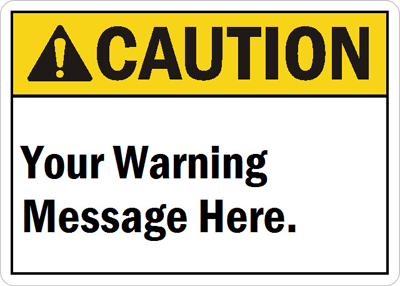
- Caution Labels: Features a yellow background with black text. These are used for lower-risk hazards that might cause minor or moderate injuries, like a wet floor or a pinch point.
- Notice Labels: Features a blue background with white text. Notice labels do not alert workers to physical hazards. Instead, they provide important facility information, instructions, or rules (e.g., “Keep Door Closed” or handwashing guidelines).

Different Types of ANSI Labeling Standards
Beyond the foundational Z535 series, ANSI provides specific standards for labeling different utilities and systems throughout your facility.
a.) ANSI Pipe Labeling Standards (ANSI/ASME A13.1): Industrial facilities rely on this standard to clearly identify the contents of piping systems. It dictates the color scheme (e.g., yellow for flammable fluids, green for water), text size, and the placement of directional flow arrows to protect maintenance workers from unexpected leaks or bursts.
b.) ANSI Electrical Conduit Labeling: Similar to pipe marking, applying the A13.1 principles to electrical conduits ensures workers immediately know the voltage level and type of electrical wiring housed within the conduit, preventing severe arc flash or shock hazards.
c.) ANSI Cable Labeling Standards (ANSI/TIA-606-B): While largely for IT and telecommunications, this standard helps organize complex server rooms and cable networks. Proper labeling here reduces downtime and maintenance errors, keeping your facility’s data systems running smoothly.
Make ANSI Compliance Easy
Applying ANSI Z535 standards doesn’t have to be complicated. At MySafetySign, our templates are designed to meet OSHA and ANSI Z535 formatting requirements right out of the box.
Need to match your exact Standard Operating Procedures? You can easily customize the text in plain English or add your company logo online. Plus, our signs are built from rigid, outdoor-ready materials to ensure your safety message outlasts the elements.
Need to upgrade your facility’s hazard communication? Browse our ANSI-compliant safety signs today. Most custom orders ship the next business day.
Category: News / New Products