

7 Essential Radiation Signs Every Workplace Needs in 2026
Ionizing radiation is an invisible hazard. You cannot see it, smell it, or taste it. Without proper warning systems, workers can unknowingly enter dangerous zones and suffer significant health consequences ranging from burns to long-term cellular damage.
According to the Nuclear Regulatory Commission (NRC) and OSHA, clear labeling is the primary method for controlling access to radioactive environments. As technology advances in 2025, from medical imaging to industrial non-destructive testing, the presence of radiation in the workplace is becoming more common.
Ensuring you have the correct signage is not just about avoiding fines. It is about making the invisible visible. Learn more about the seven specific radiation signs required to keep your facility compliant and your workers safe.
What Are Radiation Safety Signs?
Radiation safety signs are standardized visual warnings used to alert personnel to the presence of ionizing or non-ionizing radiation. They utilize specific symbols, colors, and headers to communicate the severity of the risk and the required precautions. When outfitting your lab, hospital, or industrial site, you will typically need signs such as:
Shop Radiation Signs:
-
Radiation Area Warnings
-
Radioactive Material Labels
-
X-Ray & Laser Safety Signs
-
Emergency Procedure Placards
7 Essential Radiation Signs for 2025
To meet NRC 10 CFR 20 and OSHA standards, specific areas require specific headers. Here are the top seven signs most facilities need.
1. Radiation Area Sign
This designates a zone where radiation levels are elevated but not immediately life-threatening. Where to use it: Areas where an individual could receive a dose equivalent greater than 5 millirem (0.05 mSv) in one hour at 30 centimeters from the source. This alerts workers that they are entering a controlled zone where monitoring is required.

2. High Radiation Area Sign
This sign indicates a significant escalation in risk and requires stricter access control. Where to use it: Required for areas where an individual could receive a dose equivalent greater than 100 millirem (1 mSv) in one hour. These areas typically require physical barriers, alarms, or locked doors to prevent unauthorized entry.
3. Caution: Radioactive Material Sign
This sign warns of the presence of the source itself, rather than just the ambient radiation field. Where to use it: Any room, cabinet, or container where radioactive materials are stored or used in amounts exceeding 10 times the quantity specified in NRC regulations. It is essential for labs and storage lockers.

Caution Radioactive Materials Sign
4. Authorized Personnel Only Sign
Security is a critical component of radiation safety. Where to use it: Posted at the main entrance to any restricted zone (Radiation Areas or High Radiation Areas). It reinforces that only trained, badged, and approved staff members are permitted to cross the threshold, keeping the general public and untrained workers safe.
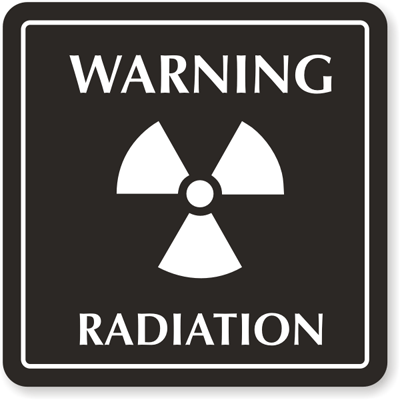
5. Radiation Warning Sign
This is a broader category often used for radiation-generating equipment rather than specific dose-rate zones. Where to use it: Commonly found on the doors of X-ray rooms, CT scan suites, or industrial laser enclosures. These signs often feature the “Caution” header and warn that the equipment produces radiation when energized.
6. Emergency Procedures Sign
In the event of a spill, leak, or exposure, workers need to know exactly what to do immediately. Where to use it: Posted conspicuously near the control panel, the exit, or the telephone. This sign should list emergency contact numbers (Radiation Safety Officer, Fire Dept), spill containment steps, and evacuation routes.
7. Personal Protective Equipment (PPE) Required Sign
Administrative controls are useless if workers enter the zone unprotected. Where to use it: At the gowning area or checkpoint before the restricted zone. It serves as a final checklist, reminding staff to don lead aprons, thyroid collars, safety glasses, and dosimeter badges before entering.
Tips for Radiation Sign Compliance
-
The Correct Colors: The standard radiation symbol must be magenta, purple, or black on a yellow background. Do not use custom colors that might confuse the meaning.
-
Symbol Orientation: The three-bladed trefoil must be oriented with one blade pointing up and two blades pointing down.
-
Inserts for Variable Conditions: If radiation levels change frequently, use sign holders with interchangeable inserts to keep warnings accurate without replacing the entire fixture.
Incorporate the Right Signs Into Your Safety Strategy
Radiation safety relies on strict discipline and clear boundaries. By posting the correct signs, you provide the critical information workers need to protect themselves from an invisible threat.
Read through some of the other articles published on our blog to get more expert advice on hazardous material handling and workplace safety.
Frequently Asked Questions (FAQ)
1. What qualifies as a “Radiation Area”?
A. A Radiation Area is defined by specific dose rates. According to the NRC, any area accessible to individuals where radiation levels could result in a dose equivalent in excess of 0.005 rem (5 millirem) in 1 hour at 30 centimeters from the source must be posted with a “Caution: Radiation Area” sign.
2. What is the symbol for radiation?
A. The international symbol for radiation is the trefoil. It consists of a central circle with three blades (or fans) radiating outward. The symbol is typically printed in magenta, purple, or black on a yellow background. Recently, a supplementary red symbol featuring a skull and waves was introduced by the IAEA for dangerous high-level sources.
3. When is a “High Radiation Area” sign required?
A. It is required when dose rates exceed 100 mrem per hour. If a person could receive a dose of 0.1 rem (1 mSv) in one hour at 30 centimeters from the radiation source, the area must be posted with a “Danger: High Radiation Area” sign. These areas usually require physical locks or control devices.
4. Why are Emergency Procedure signs required?
A. They reduce reaction time during accidents. In a radiation emergency, memory can fail due to panic. Posting clear, step-by-step Emergency Procedures near the work area ensures that staff can instantly access contact numbers and containment protocols, potentially preventing the spread of contamination.
Category: News / New Products