

Top 5 Custom Safety Signs Every Workplace Should Have
Standard safety signs are the backbone of any compliance program. Every facility needs “Exit” signs, “Fire Extinguisher” markers, and standard “Caution” placards to meet basic regulations. However, most workplaces have unique hazards, specific workflows, and internal policies that generic, off-the-shelf signs simply cannot address.
According to safety experts, visual communication is most effective when it is specific. A generic “Warning: Machinery” sign is easily ignored, but a custom label that reads “Warning: Blade Engages Automatically Every 30 Seconds” commands attention.

Custom signs bridge the gap between general regulation and site-specific reality. They allow facility managers to communicate targeted instructions that resonate with their specific teams, reducing ambiguity and preventing accidents.
By utilizing custom safety signage, companies can ensure that safety protocols are clear, relevant, and unavoidable. Learn more about the essential custom sign types every workplace needs and how to implement them below.
What Are Custom Safety Signs?
Custom safety signs are visual communication tools tailored to specific site hazards or policies not covered by standard stock inventory. They are designed to provide workers with precise instructions, such as exact weight limits, unique PPE zones, or internal traffic rules to minimize confusion. While touring a well-managed facility, you might see custom safety signs such as:
5 Essential Custom Safety Signs for Your Facility
While every site is different, there are five specific categories of custom signs that provide immense value across almost all industries. Let’s take a look at the most critical types to consider for your safety inventory.
1. Custom Fire Safety Signs
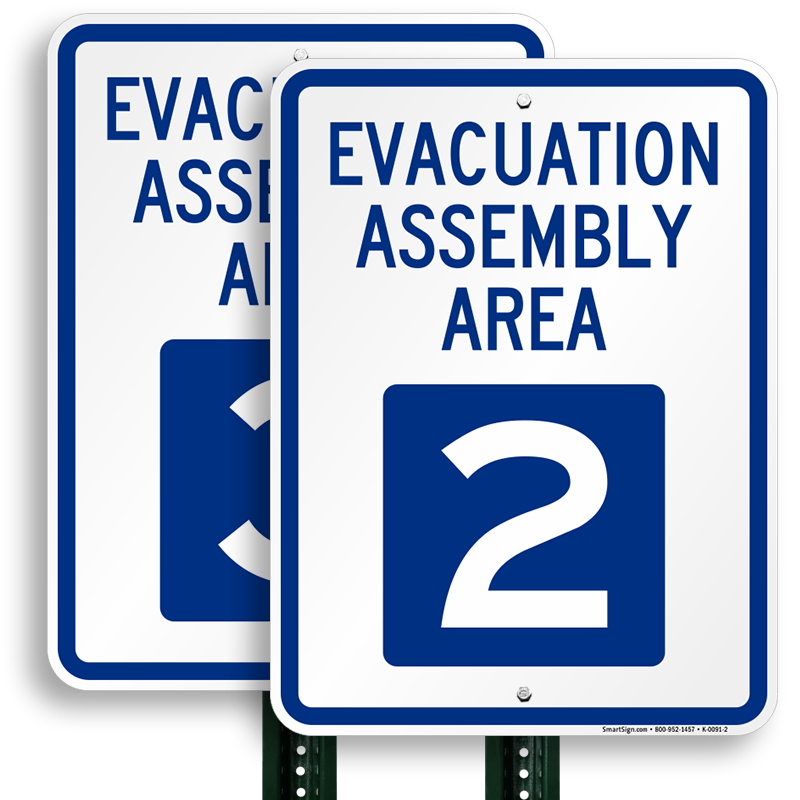
Standard “Fire Extinguisher” stickers are necessary, but they don’t tell people where to go once they leave the building. Every building has a unique evacuation plan. Custom fire safety signs are essential for identifying specific Evacuation Assembly Points (e.g., “Emergency Assembly Point: North Parking Lot, Zone B”). Additionally, custom maps placed in hallways can show the specific “You Are Here” path to the nearest exit , which is critical for visitors who don’t know the building layout.
2. Construction Site Entrance Signs
Construction sites are dynamic environments with changing rules. A generic “Construction Area” sign is often insufficient for liability and safety. Custom construction signs at the main gate can list the specific site rules enforced by the general contractor. For example: “Active Construction Site, Watch For Moving Equipment“, “Hard Hats Required On This Job Site. “ This establishes a professional safety culture immediately upon entry.

3. Zone-Specific PPE Requirements
Standard “Wear PPE” signs are often too vague for complex facilities. A custom sign at the entrance of a specific department can list exactly what is needed for that zone. For example, a chemical mixing room requires different gear than a carpentry shop. A custom sign clarifies this instantly: “WARNING: Chemical Area. Face Shield, Rubber Apron, and Nitrile Gloves Required at All Times.” This eliminates the guesswork of “which” PPE is needed.

4. Floor Safety and Trip Hazards
Slips, trips, and falls are the most common workplace accidents. While “Watch Your Step” signs are common, custom signs can address the specific architecture of your building. If you have a sudden elevation change or a ramp that gets slippery when wet, a custom sign is vital. A message like “CAUTION: Unexpected Step Down. Ramp Slippery When Wet.” draws attention to the exact hazard that a generic sign might miss.

Floor Safety Slippery When Wet
5. Warehouse Capacity and Traffic Labels
Warehouses are high-risk environments due to heavy machinery and heavy loads. The most valuable custom signs here are often Rack Load Capacity Labels . Because every racking system is configured differently, you need custom labels that state the specific weight limits for your beams (e.g., “Max Load: 2,500 Lbs Per Beam Level”). Additionally, custom aisle signs can dictate traffic flow, such as “Aisle 4: One Way Traffic Only. Do Not Enter.”
Tips to Help You Design Effective Custom Signs
Are you ready to create signs that your employees will actually read? Keep the following tips in mind to design the right signage for your site.

Custom Sign: Add Your Wording Here
- Keep it Simple: Use short, active verbs. The message should be understood in a split second.
- Use Standard Colors: Even though it is “custom,” stick to OSHA standards. Use Red for Danger, Orange for Warning, and Yellow for Caution.
- Add Symbols: Text is good, but pictures are better. Always include a safety symbol (like a fire flame, boot, or forklift icon) to ensure the message is understood by everyone, regardless of language.
Incorporate Custom Signage Into Your Safety Strategy
Hanging standard OSHA signs is the first step, but refining your safety culture with custom messaging is what takes a facility from “compliant” to “truly safe.” These targeted messages act as silent supervisors, ensuring that your specific rules are followed even when you aren’t in the room.
Read through some of the other articles published on our blog to get more information on maintaining safety on your worksites.
Frequently Asked Questions (FAQ)
1. Are custom safety signs OSHA compliant?
A. Yes, custom signs are OSHA compliant provided they follow the design standards outlined in ANSI Z535. This standard dictates that even custom text must use specific signal words (Danger, Warning), color codes (Red, Orange, Yellow), and safety headers. As long as the design adheres to these formats, the specific wording can be customized to your facility’s needs.
2. Are custom signs more expensive than stock signs?
A. Custom signs are generally slightly more expensive than stock signs due to setup and printing costs, but the difference is often negligible. Modern digital printing has made “one-off” signs very affordable. The small investment is typically outweighed by the increased safety and clarity provided by site-specific messaging.
3. What is the best material for custom warehouse signs?
A. The best material depends on placement. For outdoor construction or parking signs, rust-proof aluminum is the standard for durability. For indoor warehouse use, specifically on racks or machinery, flexible adhesive vinyl or high-performance polyester labels are preferred as they conform to surfaces and resist peeling.
4. Can I use any color for a custom safety sign?
A. No, you should strictly follow ANSI color standards. To ensure safety and compliance, use:
- Red (Danger): For immediate hazards that will result in death or serious injury.
- Orange (Warning): For hazards that could result in death or serious injury.
- Yellow (Caution): For minor or moderate injury risks.
- Blue/Green (Notice): For general information or property protection.
Category: Electrical