

Benzene: History, Hazards, and How to Stay Safe
Benzene (C6H6) is a highly flammable, colorless liquid found in gasoline, laboratory solvents, and across the chemical industry. First discovered in 1825 by English chemist Michael Faraday, it was initially called “bicarburet of hydrogen.” Before the 1950s, benzene came from coal. Today, it is primarily a byproduct of petroleum refining.
Despite its industrial importance, benzene is a serious health hazard. Since the 1940s, research has confirmed there is no safe level of exposure. Understanding where benzene comes from, how it enters the body, and how to control the risk is essential for any workplace that handles this chemical.

1. Where Benzene Exposure Happens
Breathing benzene vapors is the most common route of exposure. It evaporates quickly at room temperature, making ventilation critical in any work area where benzene is present.
Common industrial sources include:
- Rubber and petrochemical manufacturing
- Chemical processing plants
- Coke and steel production
Non-industrial sources are just as significant. Car exhaust, gas station fumes, and tobacco smoke all contain benzene. In fact, tobacco smoke is the most common source of exposure for the general public. Trace amounts of benzene can also appear in some sodas when benzoic acid reacts with vitamin C, though at very low levels.
2. Health Hazards of Benzene
Benzene is classified as a Group 1 human carcinogen by the International Agency for Research on Cancer (IARC). Long-term exposure is linked to:
- Leukemia and other blood cancers
- Bone marrow failure
- Anemia and immune system suppression
- DNA damage due to its mutagenic properties

Short-term exposure to high concentrations can cause dizziness, headaches, nausea, and unconsciousness. Skin contact with liquid benzene can also cause irritation and limited absorption.
3. OSHA Exposure Limits
OSHA sets strict permissible exposure limits (PELs) for benzene in the workplace:
- Short-term limit: 5 parts per million (ppm) over any 15-minute period
- 8-hour time-weighted average: 1 part per million (ppm)
Employers must monitor air quality, implement engineering controls like local exhaust ventilation, and provide appropriate personal protective equipment when exposure cannot be eliminated at the source.
4. Protecting Workers from Benzene
A layered safety approach is required. Engineering controls come first. Where those are not sufficient, workers must use the right protective gear:
- Face shields to protect against splashes and vapor near the eyes and face
- Protective clothing including chemical-resistant gloves, aprons, and coveralls
- Respiratory protection such as organic vapor respirators for airborne exposure
Workplaces must also display clear safety signs and hazard labels in all areas where benzene is stored or used. Signage should identify the hazard, state required PPE, and include emergency response instructions.
5. Benzene Signs: What Your Workplace Needs
OSHA’s benzene standard (29 CFR 1910.1028) requires that warning signs be posted at all entrances to regulated areas where benzene concentrations exceed the permissible exposure limit. These signs must clearly communicate the presence of benzene, the cancer risk, and the requirement for respiratory protection.
At a minimum, benzene signs used in regulated areas must include the following information:
a) The word DANGER as the signal word
b) A statement identifying benzene as a cancer hazard
c) A warning that breathing benzene vapors or skin contact can cause serious harm
d) A requirement for authorized personnel only in regulated areas
e) Instructions to use respiratory protection within the area
Beyond regulated area signs, facilities handling benzene should also post signs at storage locations, mixing stations, and any area where spills or leaks are possible. These signs should identify the flammability hazard alongside the health hazard, since benzene is both a carcinogen and a highly flammable liquid.
GHS-compliant benzene labels are also required on all containers. These labels must include the flame pictogram for flammability, the health hazard pictogram for carcinogenicity, signal words, hazard statements, and precautionary statements in line with OSHA’s Hazard Communication Standard (HazCom 2012).

Final Thoughts
Benzene is one of the most important chemical hazards in occupational safety. Its presence across industrial and everyday environments, combined with its serious long-term health effects, makes proper controls non-negotiable. From engineering solutions and correct personal protective equipment to clear workplace signage, every layer of protection matters.
Frequently Asked Questions
Q : What signs are required in areas where benzene is used?
A : OSHA’s Hazard Communication Standard requires that all benzene storage and work areas display hazard warning signs identifying the chemical, its cancer and flammability risks, required PPE, and emergency procedures. Safety data sheets must also be accessible to all workers in the area.
Q : What type of respiratory protection is needed for benzene?
A : At concentrations at or below 1 ppm, a half-face air-purifying respirator with an organic vapor cartridge is typically adequate. Higher concentrations require a full-face or supplied-air respirator. All workers must be fit-tested and trained before use.
Q : Can benzene absorb through the skin?
A : Yes. While inhalation is the primary route, liquid benzene can absorb through the skin. Standard latex gloves do not offer adequate protection. Chemical-resistant gloves and protective clothing rated for benzene exposure are required whenever skin contact is possible.
Q : How should a benzene spill be handled?
A : Evacuate the area immediately and eliminate all ignition sources. Only trained personnel wearing full PPE including respiratory protection, face shields, and chemical-resistant protective clothing should perform cleanup. All absorbent materials must be disposed of as hazardous waste per EPA guidelines.
Like this topic? Check out our related products:
-
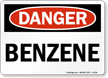
Benzene Danger Signs
Category: Resources