

How Silica Signs Improve Construction Site Safety.
More than 1.7 million workers are endangered by silica dust each year, including construction workers, miners, roofers, and farmers. Anyone in an industry that uses abrasive blasting, jackhammering, drilling, concrete mixing, block cutting, sawing, or tunneling is exposed to the toxic dust. Each year, silicosis claims around 250 lives. The disease is particularly insidious for two reasons: once contracted, it is incurable. It is also transmitted in the form of dust, which may seem harmless to untrained or distracted workers.
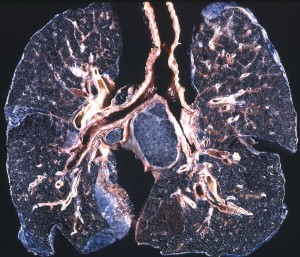
Above is the image of a coal worker’s lungs. Tiny particles of silica and carbon pigment were breathed in but could not be expelled from the lungs. The black pigmentation and fibrosis (excess connective tissue) were caused by exposure to this toxic dust. Image via Pulmonary Pathology on Flickr.
The silica exposure problem and OSHA’s response
The numbers of fatalities due to silicosis are high, and national safety organizations such as OSHA have championed efforts to curb illnesses and fatalities. For years, the push to tighten silica exposure limits was stalled in regulatory review. That changed in March 2016, when OSHA published the final Respirable Crystalline Silica rule, which became effective June 23, 2016. The rule established two standards: 29 CFR 1926.1153 for construction, and 29 CFR 1910.1053 for general industry and maritime. Together, they set a permissible exposure limit (PEL) of 50 micrograms per cubic meter (µg/m³) as an 8-hour time-weighted average and an action level of 25 µg/m³, cutting the previous PEL by 80 percent.
Regardless of regulatory timelines, the onus remains on employers, foremen, and workers to implement safe work practices. According to the Centers for Disease Control and Prevention (CDC), one of the most effective steps employers can take to prevent silicosis is a firm commitment to best practices that reduce dust on work sites.
Why silica warning signs are essential
Fortunately, most silica safety practices are commonsense ways to settle and eliminate dust. However, workers may underestimate how toxic construction site dust actually is. That is where silica warning signs come in: as a way to reinforce safety training and continually remind workers to be conscientious and vigilant. Because silicosis is incurable, workers must be frequently reminded of ways to keep themselves safe.

What silica signs must communicate under OSHA 1926.1153
Under the final silica standards, employers must communicate crystalline silica hazards to workers through hazard communication as part of their written exposure control plan. 29 CFR 1926.1153 requires that workers are informed of the health hazards of silica exposure, the specific tasks and equipment that generate silica dust on their job site, the exposure controls in place, and the PPE required in affected areas. Posted silica signs are a practical front-line tool for meeting these communication requirements: a clearly worded DANGER or WARNING sign at the access point of a silica work area identifies the hazard, states the cancer and silicosis risk, and specifies required respiratory protection before a worker sets foot in the area. Signs are available with DANGER headers for areas where exposures may exceed the PEL, and WARNING or CAUTION headers for areas where exposures are controlled but workers still need to be alert.
Best practices for preventing silicosis
Below are highlights from Oregon OSHA’s best safety practices for preventing silicosis.
Use respirators. When carefully selected, properly fitted, and correctly worn, respirators protect workers from inhaling crystalline silica dust. Respirator selection must match the exposure level per the hierarchy of controls under 29 CFR 1926.1153.
Practice good personal hygiene. Workers who handle materials containing crystalline silica should wash their hands before eating, drinking, or smoking. They should shower where possible and change into clean clothes before leaving the worksite. Eating, drinking, and tobacco use must never occur in abrasive blasting areas.
Work wet. Use wet drilling or sawing to control dust. Remove dust and debris with a wet vacuum or hose down surfaces rather than blowing debris with compressed air or dry-sweeping.

Silica Dust – Wet Sweeping Only
Post silica warning signs. Put up signs that identify work areas, tasks, and equipment that may expose workers to crystalline silica. Signs should warn workers about crystalline silica hazards and identify required personal protective equipment. Browse the full range of silica hazard signs, including DANGER crystalline silica signs, WARNING silica dust signs, and free-standing floor signs for active work areas.
Category: OSHA