

Out of Order Signs: When and Where to Use Them
A broken toilet with no sign becomes everyone’s problem. Someone tries to flush it, water overflows, and what started as a simple malfunction turns into a cleanup project and a frustrated crowd.
Out of order signs prevent that chain reaction by communicating one clear message: this isn’t working, so don’t use it. This guide covers when these signs are necessary, where to place them for maximum visibility, and what separates an effective sign from one that gets ignored.
What is an out of order sign
An out of order sign is a safety notice that alerts people when equipment, fixtures, or facilities are non-functional and should not be used. These signs prevent injury, equipment damage, and liability issues by stopping users before they interact with broken or unsafe items.
Without a clear notice, someone might try to force a jammed door, flush a broken toilet, or operate faulty machinery, leading to frustration, injury, or further damage. Out of order signs act as the first line of communication between facility managers and users, saving time and helping avoid liability issues.
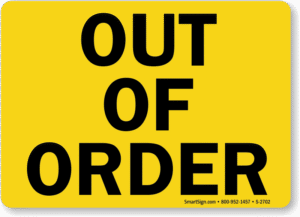 When to use an out of order sign
Post a sign immediately when something can’t be safely or properly used. This includes equipment malfunctions, scheduled maintenance, safety hazards requiring lockout, and temporary service interruptions like utility outages. Even minor issues warrant signage. A jammed vending machine might prompt customers to shake it, creating a safety hazard.
For hazardous equipment, out of order signs work alongside OSHA’s lockout/tagout standards (29 CFR 1910.147), which outline procedures to prevent accidental equipment startup during maintenance. Critical distinction: Out of order signs are informational notices. They do NOT replace OSHA-compliant lockout/tagout devices like padlocks and energy isolation tags required under 29 CFR 1910.147. In industrial settings, confusing an out of order tag with proper LOTO procedures can result in serious injury or fatality.
According to OSHA 29 CFR 1910.145(f), accident prevention tags must meet specific design requirements for visibility and durability. For ANSI-compliant signage that meets workplace safety standards, look for signs following ANSI Z535 specifications for colors, symbols, and signal words.
Understanding safety sign classifications
Not all out of order signs carry the same weight. Understanding ANSI Z535 classifications helps you choose the right sign for each situation:
| Sign Type | When to Use | Color Standard |
| Danger | Immediate hazards that will cause death or serious injury | Red header with white background |
| Caution | Potential hazards that could cause minor to moderate injury | Yellow header with black text |
| Notice | Equipment status or property damage concerns (most out of order signs) | Blue header with white or black text |
Where to place out of order signs
Placement determines whether your sign gets seen. The right spot depends on equipment type and how people approach it.
Restrooms and bathroom facilities
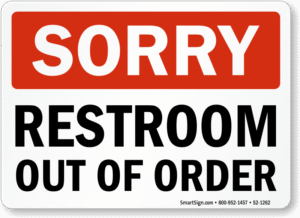
For closed restrooms, post signs on exterior doors at eye level. For individual fixtures, place signs directly on or next to the affected item.
| Situation | Where to place the sign |
| Entire restroom closed | Exterior door at eye level |
| Single toilet or urinal | Stall door or directly on fixture |
| Sink or hand dryer | On or above the specific fixture |
| Multiple fixtures | Each affected fixture plus exterior notice |
Elevators, escalators, and machinery
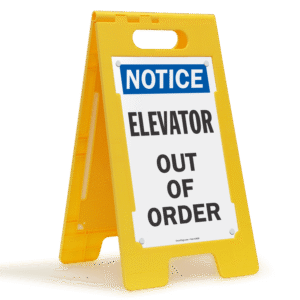
Place elevator signs at every floor entrance, not just the lobby. For escalators, post signs at both top and bottom landings. Machine signs attach directly to control panels or power switches to intercept users before they attempt operation.
Vending machines and building systems
Place signs directly over coin slots, card readers, or primary interaction points. For drinking fountains and automated doors, position signs at natural interaction points where users would first engage with the equipment.
Types of out of order signs
Different situations call for different formats:
- Wall-mounted signs: Rigid, durable options for permanent installations
- Door hangers: Portable, flexible signs for temporary situations
- Equipment tags: Informational tags for general equipment (not LOTO-compliant) with space for dates and technician names
- Floor signs: Freestanding barriers for larger closed-off areas
Out of order vs out of service
Out of order means equipment is broken or malfunctioning. Out of service means functional equipment has been intentionally taken offline for maintenance or cleaning. Both require signage, but the distinction helps with maintenance tracking.
What makes a good out of order sign
Effective signs feature bold text visible from 10 feet away, high-contrast colors following ANSI Z535 standards (red, orange, or yellow headers with black or white text), clear wording like “Out of Order” or “Do Not Use,” durable weather-resistant materials, and space for dates and contact information. For industrial environments, choose signs that meet OSHA 29 CFR 1910.145(f) specifications for accident prevention tags.
Best practices for placement
- Position at eye level: Place signs where users naturally look before approaching
- Use multiple signs: Cover all access points for large equipment
- Include dates: Help users understand repair status and prevent forgotten signs
- Remove promptly: Old signs erode trust and train people to ignore all signage
Find the right out of order sign
The right sign depends on your location, equipment type, and environment. Professional-grade signs communicate clearly and hold up over time, ensuring faster response when equipment breaks down.
Check out our related products:
- Equipment Status Signs
Frequently asked questions
1. What information should be included on an out of order sign?
A. Include a clear “Out of Order” message and the date posted. Optionally add a contact name or expected repair time to show the issue is being addressed.
2. How long should an out of order sign stay posted?
A. Only until equipment is repaired and verified as functional. Remove it immediately after service is restored to maintain signage credibility.
3. Are out of order signs required by OSHA?
A. OSHA doesn’t mandate out of order signs for general equipment, but lockout/tagout regulations (29 CFR 1910.147) require specific tags and locks for equipment under repair that poses energy hazard risks. Out of order signs serve as informational notices but cannot substitute for OSHA-compliant LOTO devices. Additionally, OSHA 29 CFR 1910.145(f) sets standards for accident prevention tags used in workplaces.
4. Can I create a handwritten sign or should I purchase a professional sign?
A. Handwritten signs work for emergencies, but professional signs are more visible, durable, and communicate higher facility management standards, especially for recurring issues or multiple locations.
Category: News / New Products