

What OSHA Electrical Safety Signs Are Required for Construction?
Construction sites are dynamic environments where hazards shift daily. Among these risks, electrocution remains one of OSHA’s “Fatal Four” leading causes of worker deaths. Temporary wiring, high-voltage machinery, and overhead power lines create a minefield of potential energy sources that must be clearly identified.
According to OSHA Standard 29 CFR 1926.200, accident prevention signs are not optional suggestions. They are mandatory safeguards. Failure to mark electrical hazards is a frequent violation that puts the entire crew at risk of severe injury or site shutdowns.
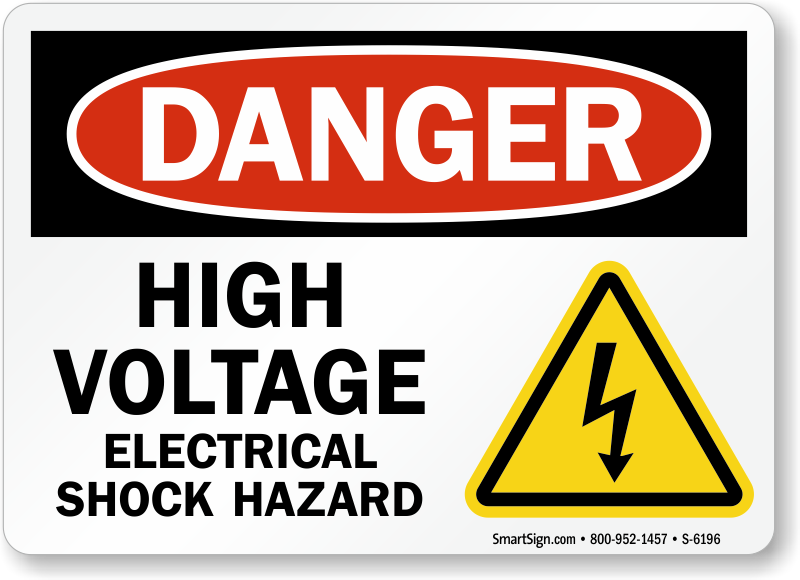
High Voltage Electrical Shock Hazard Sign
Ensuring your site is compliant requires more than just a roll of caution tape. It requires durable, highly visible signage that withstands the elements. Learn more about the specific electrical safety signs required for construction projects and where to place them.
What Are Construction Electrical Signs?
Construction electrical signs are visual warning devices used to identify temporary power sources, live circuits, and underground or overhead utilities. Unlike permanent facility signs, these must often be weather-resistant and versatile enough to move as the job progresses. When setting up your temporary power distribution, you will typically need:
Shop Construction Safety Signs:
-
Danger: High Voltage Signs
-
Buried Cable / Digging Warnings
-
Look Up and Live (Overhead Line) Signs
-
Lockout/Tagout Tags & Kits
3 Critical Electrical Signs for Job Sites
To stay compliant with OSHA construction standards, every site must address these three primary electrical hazard categories.
1. High Voltage Warnings
Temporary power poles, generator farms, and transformer boxes are common on large sites. The Requirement: OSHA requires that all electrical equipment areas be guarded to prevent accidental contact. Access points to these areas must be marked with “DANGER: High Voltage“ signs. These signs must be red, black, and white, signaling that immediate death or serious injury is certain if the hazard is touched.
2. Overhead Power Line Indicators
Cranes, excavators, and dump trucks are constantly moving around the site. Accidental contact with overhead lines is a primary cause of electrocution in the industry. The Requirement: If work is performed near energized overhead lines, signs must be posted at the operator’s station and on the ground level. Common headers include “DANGER: Overhead Power Line“ or “Danger: Live Wire Overhead,” reminding operators to maintain the mandatory 10-foot (or greater) minimum clearance distance.

3. Lockout/Tagout (LOTO) Tags
Maintenance on construction equipment happens in the field, often under less-than-ideal conditions. The Requirement: Whenever a circuit or machine is de-energized for service, it must be locked out and tagged. A “DO NOT OPERATE“ tag must be attached to the controls. This tag must be durable enough to withstand the site’s weather conditions and clearly state who locked the device and why.
Tips for Durable Site Signage
-
Choose Weatherproof Materials: Paper or standard cardstock will dissolve in the rain. Use aluminum, polyethylene plastic, or vinyl with UV-resistant ink. These materials can survive mud, rain, and direct sun for the duration of the project.
-
Secure Attachment: Construction sites are windy. Use signs with grommets in all four corners so they can be securely zip-tied to chain-link fences or nailed to wooden stakes without tearing.
-
Inspect Daily: A sign that has fallen into the mud is useless. Make sign inspection part of the daily site walkthrough. Replace any markers that are faded, torn, or covered in dust.
Incorporate the Right Signs Into Your Site Plan
Electrical safety on a construction site is about visibility and discipline. By posting the correct warnings at every temporary panel and power line, you provide the critical information workers need to navigate the site safely and return home at the end of the shift.
Read through some of the other articles published on our blog to get more expert advice on construction compliance and safety standards.
Frequently Asked Questions (FAQ)
1. What OSHA standard covers construction signs?
A. 29 CFR 1926.200 is the primary standard. This section of the OSHA regulations specifically covers “Accident Prevention Signs and Tags” for the construction industry. It mandates the design, application, and wording of signs used to warn workers of hazards, including electrical dangers, falling objects, and traffic.
2. Can I use a “Warning” sign for high voltage?
A. No, “Danger” is usually required. For high-voltage electrical hazards where contact will result in immediate death or serious electrocution, OSHA and ANSI standards dictate the use of the “DANGER” signal word (red background). “Warning” (orange) is reserved for hazards where the risk is severe but not necessarily immediate or certain death.
3. Do extension cords need to be tagged on construction sites?
A. Yes, under the AEGC program. If an employer uses an Assured Equipment Grounding Conductor (AEGC) program instead of Ground Fault Circuit Interrupters (GFCIs), all extension cords and receptacles must be tested for continuity every three months. The cords must then be marked with color-coded tape or tags to verify they have passed the latest inspection.
4. What color are electrical hazard signs?
A. Red is the standard color for electrical danger. High-voltage electrical signs typically feature a red “DANGER” header with black text and white symbols (often a lightning bolt). If the hazard is a potential risk rather than an immediate one (like a trip hazard over a cord), a yellow “CAUTION” sign may be used.
Category: Electrical